Septic Tank vs Sewer: What is the Difference?
When shopping for a home, most buyers focus on bedrooms, bathrooms, and location. One detail that often gets overlooked is how the home handles wastewater. Is the property connected to a municipal sewer system, or does it have a septic tank?
The answer can impact maintenance responsibilities, monthly costs, and even future property improvements. Understanding the differences can help you make a more informed decision when buying a home.
What Is a Sewer System?
A sewer system is a network of underground pipes maintained by a local utility or municipality. Wastewater from your home flows through these pipes to a treatment facility, where it is processed and cleaned.
With a sewer connection, homeowners pay a monthly sewer fee, but maintenance of the main system is typically handled by the utility provider.
Pros of a Sewer System
✅ Less homeowner maintenance
You don't have to worry about pumping a tank or monitoring a drain field.
✅ Convenient and reliable
As long as the system is functioning properly, wastewater disposal is largely out of sight and out of mind.
✅ Good for smaller lots
Properties with limited yard space often benefit from sewer service because no drain field is required.
Cons of a Sewer System
❌ Monthly utility costs
Most homeowners pay ongoing sewer fees.
❌ Less control over repairs
If municipal issues arise, homeowners must rely on the utility provider to address them.
❌ Potential connection fees
In some areas, connecting to a sewer system can be expensive if the property is not already connected.
What Is a Septic System?
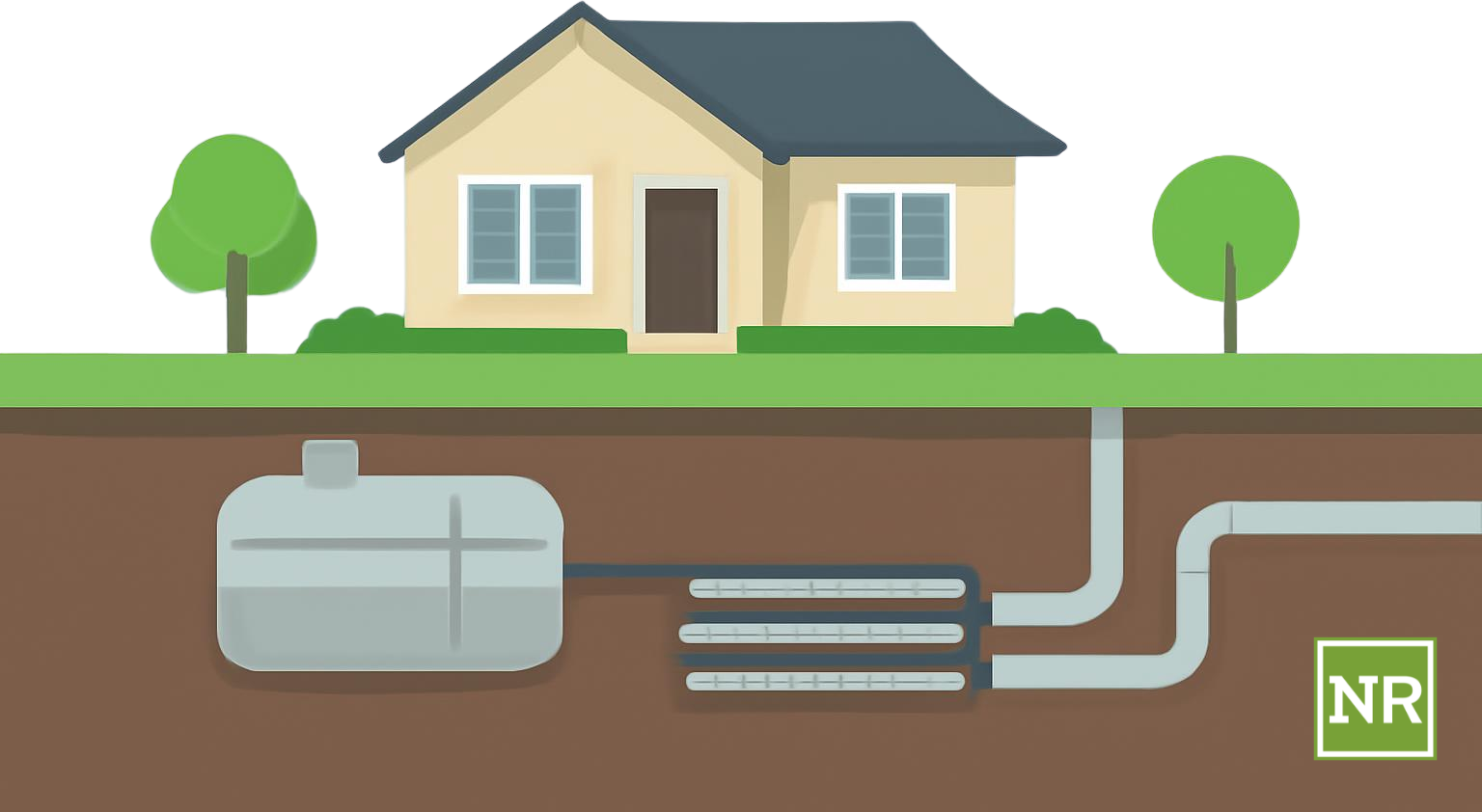
A septic system is a private wastewater treatment system located on the property. Wastewater flows into an underground tank where solids settle and liquids are filtered through a drain field.
The homeowner is responsible for maintaining the entire system.
Pros of a Septic System
✅ No monthly sewer bill
Many homeowners appreciate avoiding recurring sewer charges.
✅ Long lifespan with proper care
A well-maintained septic system can last decades.
✅ More independence
You are not dependent on municipal infrastructure.
Cons of a Septic System
❌ Regular maintenance required
Septic tanks typically need to be pumped every 3–5 years, depending on household size and usage.
❌ Potential repair costs
Replacing a drain field or repairing a failed system can be expensive.
❌ Usage considerations
Homeowners must be mindful of what goes down drains and toilets to avoid damaging the system.
Which Option Costs Less?
The answer depends on the timeframe.
A septic system often has lower ongoing costs because there is no monthly sewer bill. However, periodic pumping and potential repairs should be budgeted for.
A sewer system generally has predictable monthly expenses but fewer maintenance responsibilities.
For many homeowners, the cost difference over time is relatively small when systems are properly maintained.
Does One Affect Property Value More Than the Other?
In most cases, buyers are comfortable with either system as long as it is functioning properly.
In rural areas of Lafayette County, septic systems are common and expected. Within the city limits of Oxford, sewer connections are more common.
The condition of the system is usually more important than the type of system itself. A recently inspected septic system or a home connected to a well-maintained sewer system can both be attractive to buyers.
The Bottom Line
Neither option is inherently better. The right choice depends on your preferences, budget, and location.
If you prefer minimal maintenance and don't mind a monthly utility bill, a sewer connection may be ideal. If you value independence and lower monthly expenses, a septic system could be a great fit.
When buying a home, ask questions about the age, condition, and maintenance history of the system. Understanding how wastewater is managed can help you avoid surprises and make a confident decision.
Whether you're considering a home on septic or sewer, the Neighborhood Realty team is happy to help you understand the differences and find the property that's right for you.